

There was a time when getting the most out of a PlayStation 2 meant accepting a few compromises. Developers were constantly pushing the ageing hardware to its limits, and by 2006, the next generation of consoles was already arriving. Then Criterion Games, the studio responsible for the Burnout series, released BLACK and demonstrated just how much life Sony’s console still had left in it.
Released in February 2006 for the PlayStation 2 and original Xbox, BLACK wasn’t interested in reinventing the first-person shooter. It didn’t have an enormous campaign, complicated mechanics or particularly memorable characters. Instead, Criterion concentrated on something remarkably simple: making guns feel absolutely fantastic to fire.
And bloody hell, did they manage it.
When Gunfire Became the Main Attraction
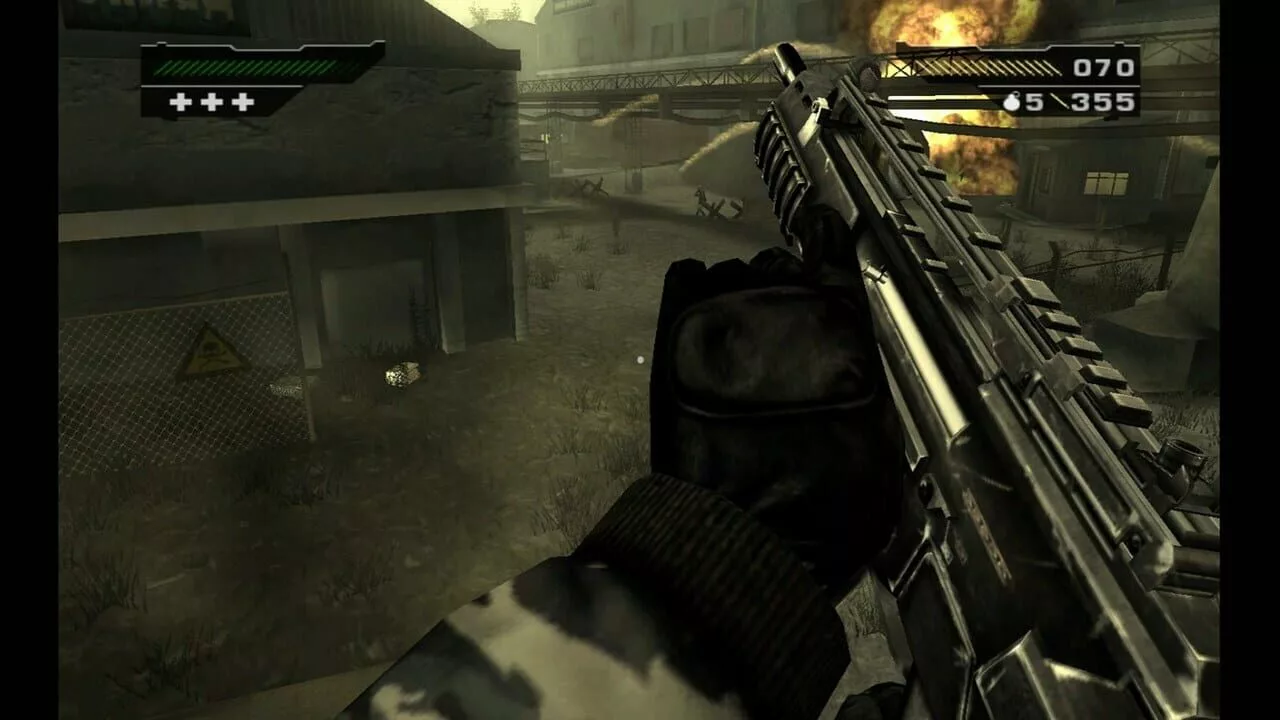
The first thing that stands out about BLACK is its presentation. For a PlayStation 2 game, the level of detail is genuinely impressive, particularly when the shooting starts. Every weapon feels heavy and deliberate. Assault rifles rattle through ammunition, shotguns deliver tremendous blasts, and the reload animations have an almost obsessive attention to detail. Even the sound of spent cartridges hitting the ground contributes to the atmosphere.
But what really separated BLACK from many of its contemporaries was how the environment reacted to being shot. Bullets chipped away at walls, shattered windows and sent debris flying across rooms. Explosions filled the screen with smoke, dust and fragments of whatever unfortunate object had been caught in the blast. Firefights frequently ended with an area looking considerably worse than when you entered it.

Not everything was destructible, of course. Much of the destruction was carefully scripted, and certain walls remained completely unaffected no matter how much ammunition you wasted on them. Nevertheless, the illusion was remarkably convincing. It’s easy to see the influence of Burnout here. Criterion had already mastered the art of making spectacular crashes entertaining, and BLACK applied that same philosophy to gunfights. Instead of watching vehicles crumple into wreckage, you were watching entire firefights descend into complete chaos.
The studio understood something important: firing a weapon should feel satisfying even when you miss.
A Shooter That Refused to Slow Down
BLACK puts players in the boots of Sergeant Jack Kellar, an American black-operations soldier whose mission against a terrorist organisation known as the Seventh Wave is revealed through a series of interrogation scenes.
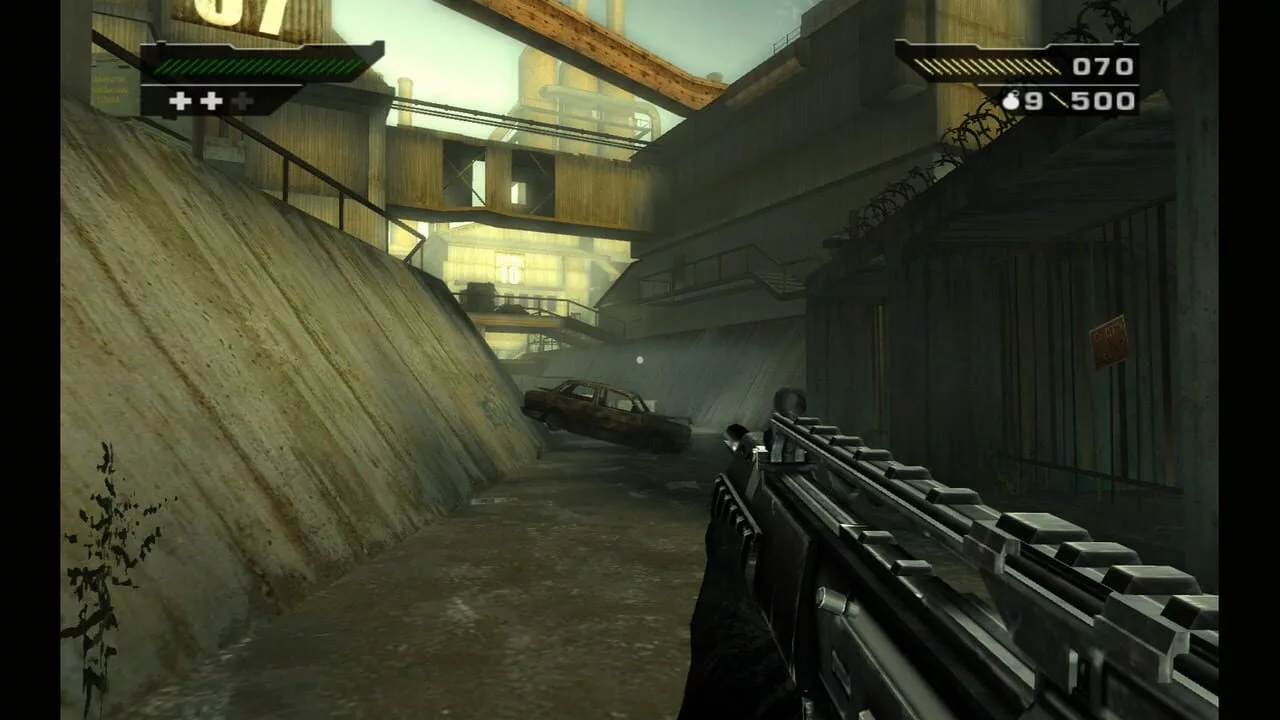
The storyline provides an excuse to send Kellar through ruined cities, industrial complexes, abandoned buildings and hostile military positions. There’s plenty of talk about covert operations and dangerous enemies, but let’s be realistic: nobody remembers BLACK because of its gripping political thriller. They remember the shooting.
The campaign consists of eight missions, with players fighting through large environments packed with enemy soldiers, explosive objects and increasingly intense encounters. Take the opening mission in Veblensk City Street. Within minutes, you’re exchanging fire in a devastated urban environment where windows shatter, vehicles explode and bullets tear chunks from the scenery. It’s an excellent introduction to what the game does best.
There’s little encouragement to approach situations carefully. Where something like SOCOM 2: U.S. Navy SEALs rewarded patience, coordination and precision, BLACK was considerably happier when you were emptying an assault rifle into anything that moved. That doesn’t mean there was no strategy involved. Positioning, ammunition management and identifying explosive objects could make difficult encounters much easier. However, the game rarely demanded particularly sophisticated tactics.
Sometimes, you just wanted to pick up an AK-47 and cause an unreasonable amount of destruction. BLACK knew exactly how to accommodate that.
Unfortunately, Spectacle Could Only Carry It So Far
As impressive as BLACK was technically, it wasn’t without its problems.
Perhaps the biggest issue was repetition. Once the initial excitement of the explosions and gunfire started wearing off, the limitations of its gameplay became increasingly noticeable. Enemy artificial intelligence was fairly basic. Soldiers frequently behaved predictably, taking cover in obvious positions or exposing themselves to gunfire. Some enemies could absorb a ridiculous number of bullets, which felt particularly strange in a game that otherwise worked so hard to make its weapons convincing.
Mission objectives weren’t especially imaginative either. Much of the campaign involved moving through an area, eliminating enemies, collecting intelligence or destroying designated targets before proceeding to the next firefight. Then there was the length.
With just eight missions, an experienced player could finish BLACK in approximately six or seven hours. That wouldn’t necessarily have been a problem if there were more reasons to return, but the game had no multiplayer whatsoever. For a first-person shooter released in 2006, that was a significant omission. Games such as Star Wars Battlefront had demonstrated just how much replayability different modes and multiplayer battles could provide.
BLACK offered additional difficulty settings and unlockable rewards, but there wasn’t much beyond replaying the same campaign. The story didn’t help matters. Despite the dramatic interrogation sequences and shadowy conspiracy surrounding Kellar, the narrative never really developed into anything particularly interesting. Its ending was especially underwhelming, leaving the impression that the developers had spent considerably more time perfecting explosions than writing a satisfying conclusion.
To be fair, they probably made the right choice about where to concentrate their efforts. But the weaknesses were still there.
Twenty Years Later, BLACK Still Has Something Special
Looking back at BLACK today, it’s difficult not to admire what Criterion achieved with the hardware available. The graphics have obviously aged, the controls can feel restrictive, and its limited gameplay variety becomes apparent relatively quickly. Nobody should go into BLACK expecting the depth or freedom of a modern shooter.
Yet there’s something appealing about a game that understands exactly what it wants to be. BLACK wasn’t trying to build an enormous franchise around character progression, customisable loadouts or dozens of multiplayer modes. It wanted to deliver the sensation of being dropped into an over-the-top action film, armed with an absurd amount of firepower.
And when everything came together, it was brilliant The combination of thunderous sound design, detailed weapons and spectacular environmental effects made even relatively ordinary encounters feel dramatic. Criterion created a shooter where the act of pulling the trigger was as entertaining as the objective you were trying to complete.
Final Thoughts: An Imperfect but Unforgettable Shooter
BLACK is an interesting game to revisit because its greatest strengths and biggest weaknesses are so closely connected.
Criterion poured an extraordinary amount of effort into making the gunplay memorable, but didn’t develop enough variety around it to sustain the experience. The result was a relatively short, repetitive shooter that nevertheless delivered some of the most impressive firefights of its generation. Would a longer campaign, stronger enemy intelligence and proper multiplayer have made it better? Absolutely.
But perhaps part of BLACK’s appeal is that it never became another enormous franchise. It arrived, made one hell of a noise, and disappeared without a direct sequel. Twenty years later, plenty of more ambitious shooters have come and gone, yet BLACK remains surprisingly easy to remember. Not because it was the most sophisticated FPS ever made.
But because few games on the PlayStation 2 made firing an assault rifle feel quite so satisfying.

 pushed the PS2 to its limits with explosive gunplay and impressive destruction. We revisit Criterion's ambitious but flawed FPS.)