

For football fans of a certain age, the summer of 2006 was not just about watching the FIFA World Cup in Germany. It was about playing it.
Long before Ultimate Team dominated football gaming, and years before online seasons became the default way to play, EA Sports released 2006 FIFA World Cup, a standalone football title dedicated entirely to the biggest sporting event on Earth. Released ahead of the real tournament, it allowed players to guide their favourite nation through qualification, rewrite football history, unlock legendary players and recreate some of the greatest World Cup moments ever witnessed.
Nearly two decades later, many fans still regard it as one of the best World Cup games EA Sports has ever produced. It was not just FIFA with a World Cup badge stuck on the front. It had its own identity, its own atmosphere and its own sense of occasion.
So what made 2006 FIFA World Cup so memorable? Let us revisit one of EA Sports’ finest football spin-offs and look at the different versions, modes, features, players and details that helped make it a genuine classic.

A Game Built Around the World’s Biggest Tournament
Unlike the mainline FIFA games, which were built around club football, 2006 FIFA World Cup focused almost entirely on international football. That gave the game a very different feel from FIFA 06. Instead of jumping between domestic leagues, transfers and club competitions, everything revolved around national pride, qualification pressure and the dream of lifting the World Cup.
The game featured 127 national teams, giving players the chance to control far more than the 32 sides that eventually reached the real tournament in Germany. That mattered because it made the game feel bigger than a simple tournament simulator. You were not just playing as Brazil, England, Germany or Italy. You could attempt to take smaller nations through qualification and create your own football story.
The 12 official stadiums from the 2006 tournament were also included, helping the presentation feel authentic. The German setting gave the game a strong identity, and the stadium atmosphere was one of the reasons it stood out from other football titles of the time. Every match felt like part of a global event, not just another quick kick-off.
The Different Versions of 2006 FIFA World Cup
One of the most interesting things about 2006 FIFA World Cup is how widely it was released. EA Sports launched the game across a huge range of platforms, including PlayStation 2, Xbox, Xbox 360, Nintendo GameCube, PC, PSP, Nintendo DS, Game Boy Advance and mobile phones.
That wide release meant the experience varied depending on where you played it. The PlayStation 2, original Xbox and GameCube versions delivered the fuller traditional console experience, with strong content, solid gameplay and the modes most players remember. The PC version offered a similar style of game, making it a popular option for players who preferred keyboard controls or wanted to play on a home computer.
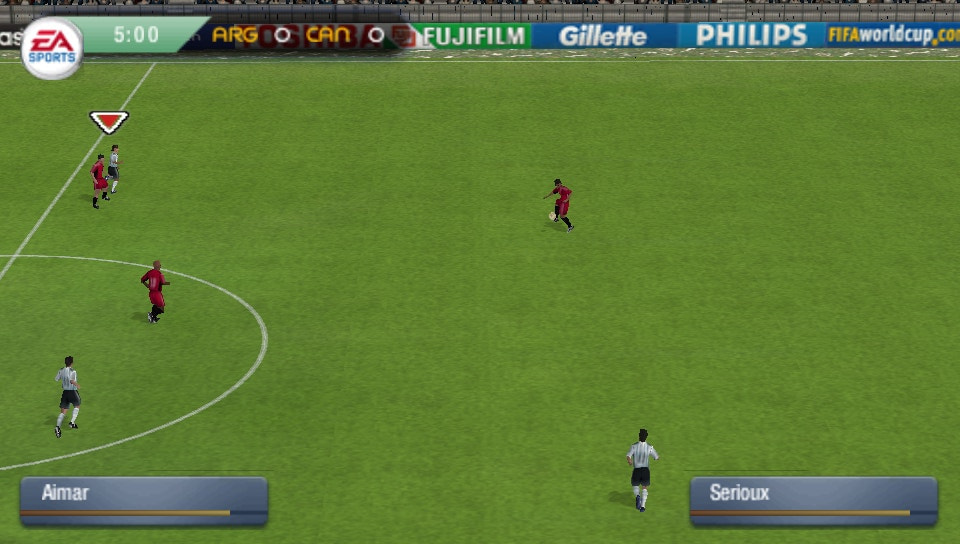
The Xbox 360 version was visually impressive for the time, especially because the console was still new. Player models, lighting and stadium presentation looked sharper than on the older machines. However, many fans felt that the 360 version lacked some of the depth and completeness found in the PS2 and Xbox versions. It was a clear example of the early HD era: better graphics, but not always the richest feature set.
The handheld versions were naturally more limited. The PSP edition was the closest to a proper portable console version, while the Nintendo DS, Game Boy Advance and mobile versions simplified the experience further. Even so, they helped make 2006 FIFA World Cup feel like a true global release. Whether you were playing on a home console, a handheld or a phone, EA wanted the World Cup to be everywhere.
Game Modes That Gave It Real Replay Value
The strongest part of 2006 FIFA World Cup was not just the match engine. It was the structure around it. The game offered several ways to play, and each one captured a different side of international football.
The main World Cup mode let players take control of a qualified nation and play through the tournament, from the group stage to the final. It was the cleanest and most direct way to experience the game. Pick your team, survive the group, battle through knockout football and try to lift the trophy.
Qualification mode was arguably even better. Instead of simply starting at the finals, players could guide a country through the long qualification process. This is where the game became special. Taking Brazil or Germany to the tournament was one thing. Taking a smaller nation through a difficult qualifying campaign was far more satisfying.
This mode gave the game huge replay value because every campaign could feel different. You could build a story around an underdog, turn a low-ranked country into a tournament surprise package or attempt to dominate with one of the giants. For fans who love football management-style narratives but still want to play the matches themselves, qualification mode was brilliant.
There were also quick match options, tournament setups and multiplayer modes, making the game ideal for both solo play and couch competition. Before online modes became the centre of football gaming, local multiplayer was king. Friends could pick rival nations, run mini-tournaments and settle arguments through penalties, last-minute winners and dramatic extra-time goals.

Global Challenge: One of EA’s Best Forgotten Ideas
If there is one mode that deserves more recognition, it is Global Challenge.
Global Challenge placed players into famous moments from World Cup history and asked them to complete specific objectives. Instead of simply replaying full matches, you were dropped into scenarios inspired by iconic tournament drama. The mode challenged players to change outcomes, rescue losing positions, score crucial goals or recreate historic achievements.
This was years before modern football games started experimenting heavily with short-form scenario content. Today, EA Sports FC has modes that resemble this idea, but Global Challenge still feels more meaningful because it was tied directly to World Cup history. It made players engage with the mythology of the tournament, not just the mechanics of football.
Completing challenges also rewarded players with points and unlockables, giving the mode a strong sense of progression. It was not there as filler. It was one of the reasons people kept playing after winning the tournament once. For retro football fans, Global Challenge remains one of the most beloved features in any EA football game.
Unlockables That Actually Felt Rewarding
Another reason 2006 FIFA World Cup has aged well is its unlockable content. In the modern era, football games are often criticised for pushing players towards packs, live-service events and real-money spending. This game came from a different time.
Players earned points by playing matches and completing objectives. Those points could then be spent in the in-game store on rewards such as classic kits, footballs, boots, legendary players and other extras. The important part is that these rewards felt earned. You played the game, completed challenges and gradually unlocked more content.
That system gave the game a satisfying loop. Winning matches mattered. Completing Global Challenge mattered. Progress felt connected to time spent enjoying the game rather than money spent outside it. In many ways, this is one of the reasons older sports games are looked back on so fondly. They rewarded play, not payment.

The Players: A Golden Generation in One Game
Looking back, the player roster is one of the biggest reasons 2006 FIFA World Cup feels so nostalgic. The real tournament featured an incredible generation of footballers, and the game captured many of them at or near their peak.
Brazil had Ronaldinho, Ronaldo, Kaka, Roberto Carlos and Adriano. England had David Beckham, Steven Gerrard, Frank Lampard, John Terry, Rio Ferdinand, Michael Owen and a young Wayne Rooney. France had Zinedine Zidane, Thierry Henry, Patrick Vieira, Claude Makelele and Lilian Thuram. Italy had Gianluigi Buffon, Fabio Cannavaro, Andrea Pirlo, Francesco Totti, Alessandro Del Piero and Luca Toni.
Germany had Miroslav Klose, Philipp Lahm, Michael Ballack and Bastian Schweinsteiger. Portugal had Luis Figo, Deco and a young Cristiano Ronaldo. Argentina had Juan Roman Riquelme, Hernan Crespo, Javier Saviola and Lionel Messi at the very beginning of his international story.
That mix of established legends and rising superstars makes the game feel like a playable time capsule. You can see one era ending and another beginning. Zidane was approaching the final act of his career. Ronaldinho was the face of football magic. Cristiano Ronaldo and Messi were not yet the global icons they would become. For football fans, that alone makes the game fascinating to revisit.

The 2006 World Cup Context Made the Game Better
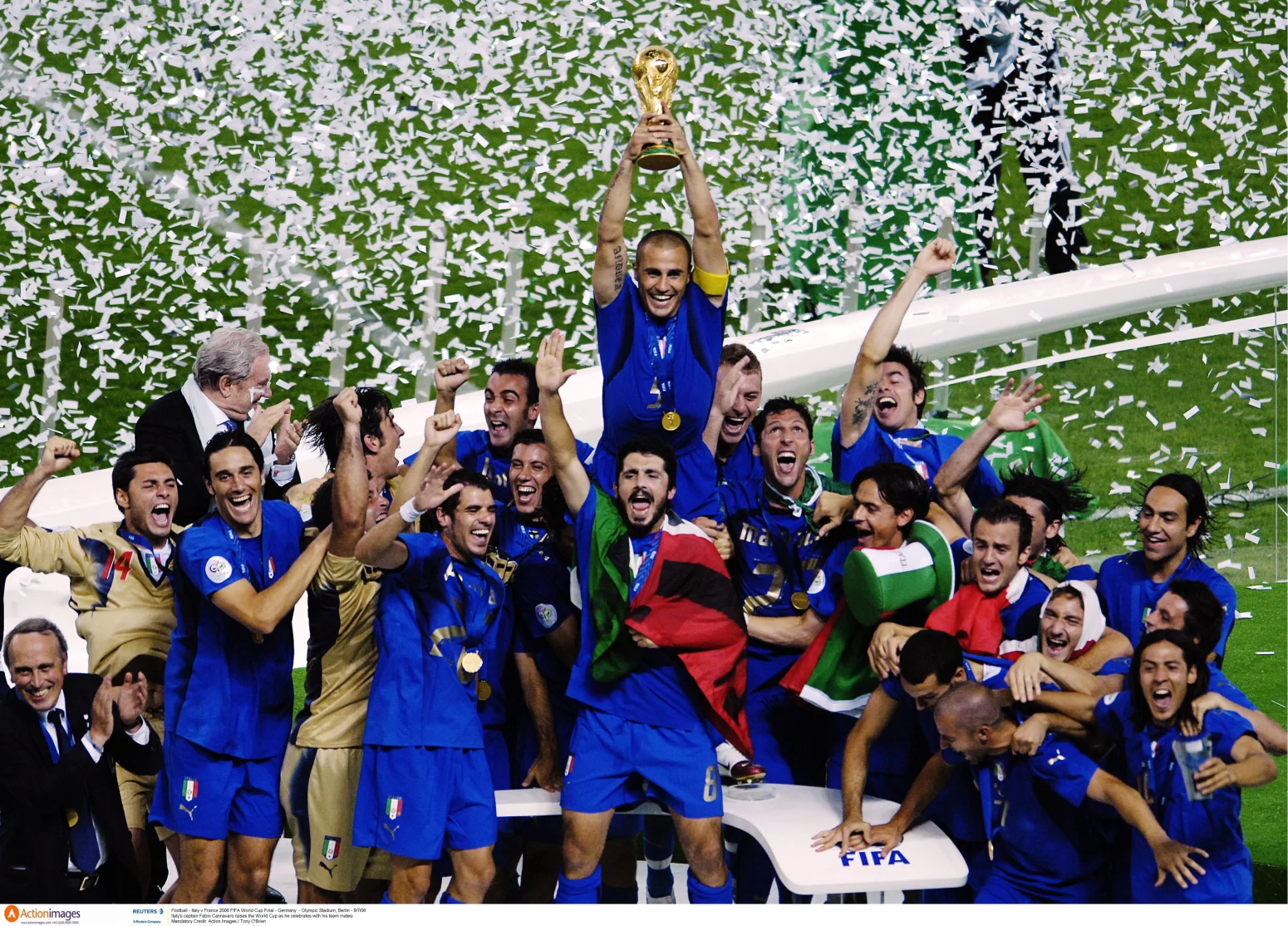
The game also benefited from the tournament it was attached to. Germany 2006 remains one of the most memorable World Cups of the modern era. Italy won the trophy after a dramatic final against France. Zidane’s headbutt on Marco Materazzi became one of the most famous moments in football history. Fabio Cannavaro delivered one of the great defensive tournaments. Miroslav Klose won the Golden Boot. Germany impressed on home soil. Portugal reached the semi-finals. Ghana announced themselves as a serious international side.
Because the real tournament was so rich in stories, the game gained extra emotional weight. Playing it after watching those matches made everything feel more personal. You could try to fix England’s heartbreak, give Brazil the tournament many expected them to have, take Germany one step further at home or guide Italy to glory all over again.
That is the magic of a good World Cup game. It does not exist separately from the tournament. It becomes part of the memory of that summer.
Gameplay: Simple, Fast and Fun
By today’s standards, 2006 FIFA World Cup is obviously less complex than modern EA Sports FC titles. The animations are simpler, the tactics are lighter and the player movement is less realistic. However, that does not mean the gameplay is worse. In some ways, its simplicity is exactly why it remains so enjoyable.
Passing is quick. Shooting feels powerful. Matches move at a good pace. Skill moves exist, but they do not dominate the entire experience. The game does not constantly interrupt you with heavy animations, endless menus or live-service distractions. It gets you onto the pitch quickly and lets you play football.
That balance between arcade fun and football authenticity was one of EA Sports’ strengths in the mid-2000s. The game was realistic enough to feel like the World Cup, but accessible enough for almost anyone to enjoy. You did not need to master complicated systems to have a good time. You could pick a team, play a match and immediately feel the excitement.

Atmosphere and Presentation
The atmosphere is where 2006 FIFA World Cup truly shines. EA understood that the World Cup is not just another football competition. It is flags, anthems, packed stadiums, national colour, pressure and spectacle.
The presentation leaned heavily into that. Menus had a tournament feel. Stadiums felt alive. Crowd noise rose during big moments. National teams felt distinct. Knockout games carried more tension than ordinary friendlies. Winning the trophy felt like a genuine achievement because the game treated the competition with respect.
This is something some modern football games struggle with. They may have better graphics and more licences, but they often lack the focused identity of older tournament games. 2006 FIFA World Cup knew exactly what it wanted to be: a celebration of international football.
Why It Still Has a Following Today
Retro football gaming has grown in popularity because many players feel older games offered something modern titles have lost. 2006 FIFA World Cup is a perfect example.
It has no Ultimate Team market. No daily objectives. No constant online pressure. No real-money packs. No complicated seasonal content. Instead, it offers national teams, qualification campaigns, historical challenges, unlockables and straightforward football fun.
For collectors, the PS2 and Xbox versions are especially appealing because they represent the most complete home console experience. For players interested in graphics, the Xbox 360 version remains an interesting snapshot of early HD sports gaming. For handheld fans, the PSP version is still a fun portable option. Every version has its place, but the classic console editions remain the ones most fans remember best.
Final Verdict
2006 FIFA World Cup is more than a nostalgic football game. It is one of the best examples of how to build a sports title around a single tournament.
It captured the excitement of Germany 2006, offered meaningful qualification campaigns, included a huge range of national teams, delivered one of EA’s best historical challenge modes and rewarded players with unlockables that felt genuinely worth earning. It also featured one of the greatest generations of footballers ever assembled in a video game.
Modern football games are bigger, sharper and more connected, but very few have captured the soul of the World Cup as well as this one. For anyone who grew up playing it, 2006 FIFA World Cup remains a classic. For anyone discovering it today, it is a reminder of a time when football games were simpler, more focused and built around pure sporting excitement.
If you have an old PlayStation 2, Xbox, GameCube, or PSP tucked away, this is one retro football title worth revisiting. Nearly twenty years later, 2006 FIFA World Cup still feels like one of EA Sports’ finest celebrations of the beautiful game.