
When Grand Theft Auto III arrived on the PlayStation 2 in October 2001, it didn’t just change the direction of Rockstar Games. It helped reshape the entire video game industry. Suddenly, the idea of exploring a sprawling city, stealing cars, causing chaos and following a criminal storyline wasn’t simply an interesting concept. It was the formula everyone wanted a piece of. By the time Vice City and San Andreas had arrived, Grand Theft Auto had become one of gaming’s biggest franchises, and publishers were understandably eager to find an answer of their own.
What followed was one of the most interesting periods in open-world gaming history. Throughout the 2000s, developers experimented with their own interpretations of Rockstar’s hugely successful formula. Some attempted to replicate its freedom and criminal underworld, while others took the concept in entirely different directions. Players could patrol Los Angeles as an undercover police officer, become a gangster on the streets of London, build a drug empire in Miami or fight for control of an American city. There were ambitious ideas, enormous virtual environments and, inevitably, a fair share of technical disasters.
Not all these games were successful, and relatively few developed into long-running franchises. Some struggled to match GTA’s polish, others disappeared following disappointing sequels, and a handful arguably deserved far more recognition than they received. Yet dismissing them all as cheap Grand Theft Auto clones would overlook just how much creativity existed during this period. Many introduced ideas that Rockstar hadn’t explored, and several remain fascinating examples of developers attempting to establish their own identities in an increasingly competitive genre.
More than two decades later, Grand Theft Auto remains a dominant force in open-world gaming, while many of its former competitors have disappeared from the conversation. But for anyone who spent the PS2 and Xbox years exploring virtual cities beyond Liberty City, Vice City and San Andreas, these forgotten alternatives represent an era when almost every major publisher seemed convinced it could create the next big open-world phenomenon.

Driver: The Franchise That Was There Before GTA Went 3D
Long before Grand Theft Auto III introduced millions of players to a fully three-dimensional Liberty City, Reflections Interactive had already demonstrated the appeal of driving freely around recognisable American cities. Released in 1999, the original Driver placed players in the shoes of undercover police officer John Tanner, combining cinematic car chases with environments inspired by Miami, San Francisco, Los Angeles and New York. Its emphasis on vehicle handling, police pursuits and seventies-style crime films gave it a distinct identity, while its sequel, Driver 2, expanded the experience by allowing players to leave their vehicles and explore on foot.
In many respects, Driver was ahead of its time. The series understood the appeal of cinematic urban driving before the explosion of 3D open-world crime games, but the arrival of GTA III fundamentally changed what audiences expected from the genre. Driving was no longer enough. Players wanted to explore streets on foot, engage in shootouts and interact with their surroundings in ways that Driver had never originally been designed to accommodate. By the time Reflections released DRIV3R in 2004, the series was competing in a market that had moved considerably beyond its original strengths.
DRIV3R attempted to bridge that gap by offering large environments based on Miami, Nice and Istanbul, complete with driving missions, gunfights and a substantial cinematic storyline. On paper, the concept had enormous potential. The franchise still possessed an impressive understanding of vehicle-based action, and its commitment to creating elaborate car chases remained one of its strongest qualities. Unfortunately, the finished game was undermined by awkward on-foot controls, questionable artificial intelligence and numerous technical problems. Contemporary reviews were particularly critical of its inconsistent performance and bugs, turning what should have been a major return into one of the more notorious disappointments of the generation.
Reflections made another attempt with Driver: Parallel Lines in 2006, shifting the action to New York and introducing a story that moved between 1978 and 2006. It was a more focused experience, with a stronger emphasis on driving and a more coherent approach to its open world, but by then GTA had established such a commanding position that regaining the initiative was always going to be difficult. The Driver franchise eventually found a different direction with Driver: San Francisco in 2011, a game remembered for its unusual ability to switch between vehicles and its return to driving-focused gameplay.
Looking back, Driver’s story is particularly interesting because it wasn’t originally conceived as an imitation of Grand Theft Auto’s 3D formula. It was one of the franchises that helped establish the appeal of open urban driving in the first place. Its difficulties came when the industry began demanding that every driving game become something bigger, and in chasing that expectation, Driver arguably lost sight of what had made it special.
True Crime: Streets of LA — GTA From the Other Side of the Law
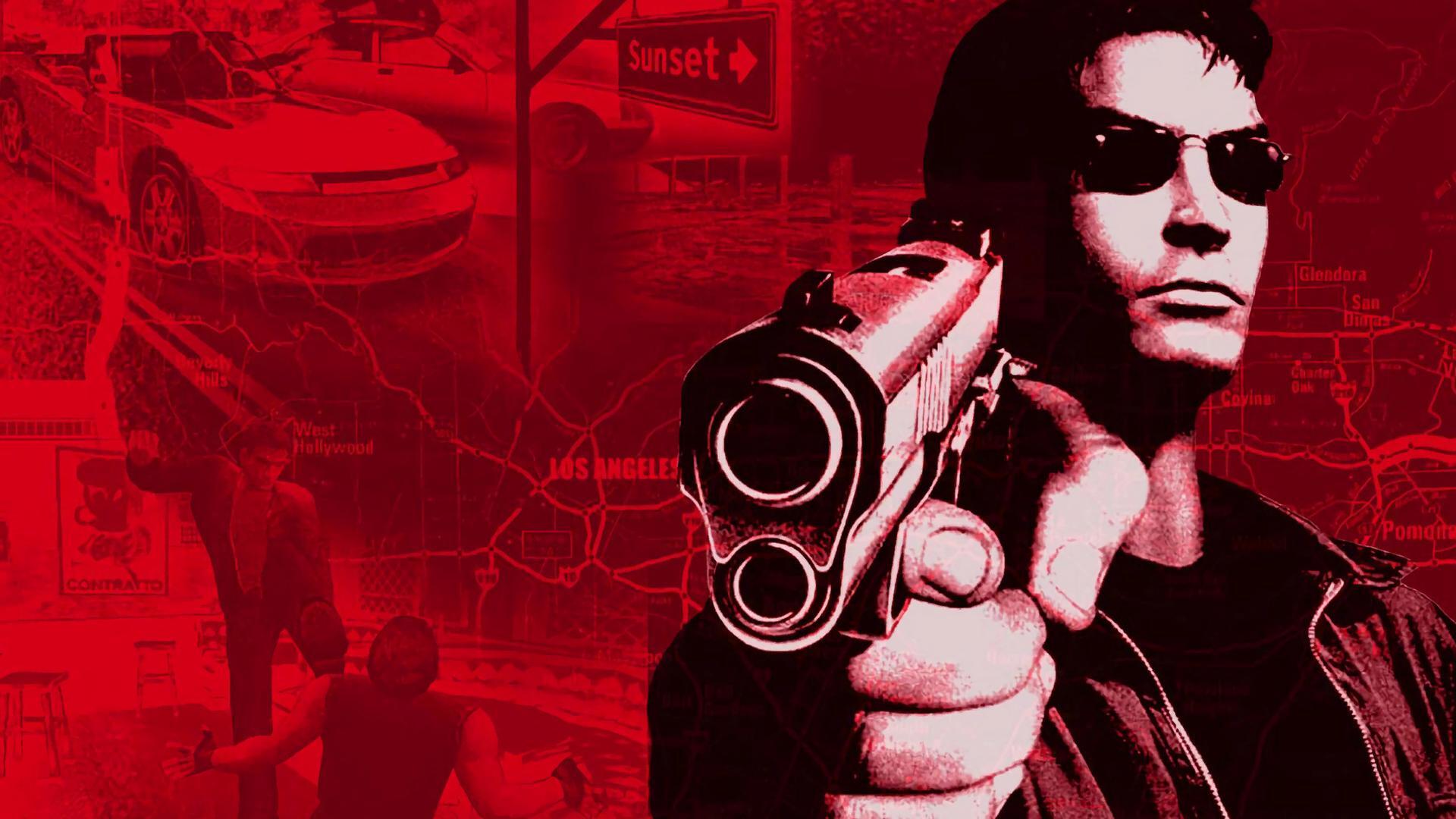
If Driver represented a franchise trying to adapt to the new open-world landscape, True Crime: Streets of LA was a much more direct attempt to offer players an alternative to Grand Theft Auto. Developed by Luxoflux and released by Activision in 2003, the game recreated an extensive version of Los Angeles and placed players in the role of Nick Kang, a police officer whose unconventional approach to law enforcement often bordered on outright criminal behaviour.
Its biggest distinguishing feature was the decision to approach the familiar GTA formula from the perspective of the police. Rather than building a criminal reputation through robberies and gang warfare, players investigated crimes, apprehended suspects and pursued criminals through the streets of Los Angeles. The game included hand-to-hand combat, shootouts, driving sequences and random street crimes, creating a combination of mechanics that was surprisingly ambitious for its time. A morality system also tracked Kang’s behaviour, allowing players to approach situations as a relatively responsible officer or embrace considerably more questionable methods. These decisions could influence how the storyline unfolded, giving the experience a degree of flexibility beyond its main missions.
True Crime wasn’t without its problems. Its combat systems could feel inconsistent, the story frequently descended into exaggerated action-movie territory, and the enormous recreation of Los Angeles didn’t always translate into an especially interesting world to explore. Nevertheless, it offered something that GTA generally didn’t: the ability to experience an open-world crime game from the perspective of someone supposedly enforcing the law. That difference was enough to give True Crime a personality of its own, even when the similarities to Rockstar’s franchise were impossible to ignore.
Activision followed it with True Crime: New York City in 2005, introducing a new protagonist, Marcus Reed, and another ambitious urban environment. Unfortunately, the sequel suffered from significant technical issues, bugs and uneven gameplay, damaging a franchise that had shown considerable promise only two years earlier. A third project, originally developed under the True Crime name and set in Hong Kong, would eventually take a very different route after Activision cancelled it. Square Enix subsequently acquired the project and released it as Sleeping Dogs in 2012.
That connection is perhaps True Crime’s most enduring legacy. While the original series disappeared, its basic premise of exploring a criminal underworld from the perspective of an undercover officer helped lead to one of the most fondly remembered open-world games of the following generation. True Crime never matched Grand Theft Auto’s success, but its ideas proved considerably more resilient than the franchise itself.
The Getaway — London’s Ambitious Answer to Liberty City
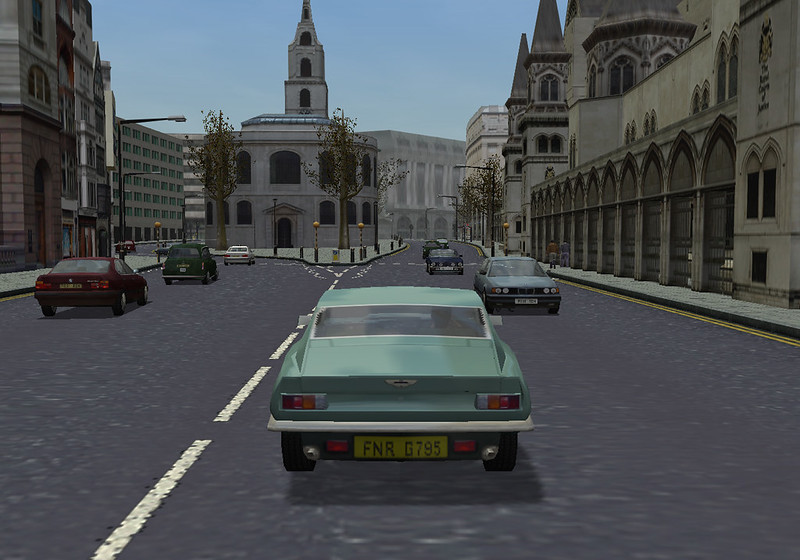
Of all the games attempting to establish themselves alongside Grand Theft Auto during the PlayStation 2 era, few were quite as distinctive as The Getaway. Developed by Sony’s Team Soho and released in Europe in December 2002, the game abandoned the fictional American cities of GTA in favour of a detailed recreation of central London. Players drove through recognisable streets, passed familiar landmarks and became entangled in a violent British gangster story that owed more to films such as Lock, Stock and Two Smoking Barrels than Rockstar’s particular brand of American satire.
The Getaway followed Mark Hammond, a former criminal dragged back into London’s underworld after his wife is murdered and his son kidnapped. A second playable perspective introduced detective Frank Carter, allowing the story to explore the conflict from both sides of the law. It was an unusually cinematic approach for the time, with extensive cutscenes, professional actors and a serious tone that deliberately separated the game from GTA’s more exaggerated atmosphere.
Perhaps its most impressive achievement was the recreation of London itself. Team Soho undertook an extraordinary research effort, collecting hundreds of thousands of reference photographs to reproduce the city’s streets and buildings. The developers also created technology capable of continuously streaming the environment from the PlayStation 2’s disc, avoiding the need to divide London into separate sections with obvious loading screens. Even today, the ambition behind recreating such a recognisable real-world city on the hardware of the period is difficult not to admire.
The Getaway also rejected many of the interface conventions that players had grown accustomed to. There was no traditional minimap directing players towards their destination, with vehicle indicators instead showing where to turn. Health wasn’t represented by an on-screen bar either; players had to judge their condition through visual cues, while leaning against walls allowed their character to recover. These decisions strengthened the cinematic presentation, although they could also make an already challenging game considerably more frustrating.
The shooting mechanics were clumsy, certain missions relied heavily on trial and error, and the driving controls could be unforgiving. Yet The Getaway achieved something many of its competitors struggled with: it felt genuinely different. Its grounded presentation, British setting and ambitious storytelling created an atmosphere that Grand Theft Auto wasn’t attempting to replicate. A sequel, The Getaway: Black Monday, arrived in 2004, followed by the PSP spin-off Gangs of London, but the series ultimately failed to become the major PlayStation franchise its early ambition might have suggested.
For British players in particular, there was something remarkable about exploring a convincing version of London on the PS2. Long before photorealistic open worlds became a routine marketing promise, The Getaway demonstrated just how far developers were prepared to push the hardware in pursuit of a believable virtual city.

Scarface: The World Is Yours — Building Tony Montana’s Empire
When Radical Entertainment released Scarface: The World Is Yours in 2006, it faced an unusual challenge. Grand Theft Auto: Vice City had already drawn considerable inspiration from the 1983 film Scarface, so creating an open-world game based directly on that film inevitably invited comparisons with Rockstar’s established interpretation of Miami’s criminal underworld.
Rather than simply retelling the film, Radical took the more interesting approach of rewriting its ending. Tony Montana survives the assault on his mansion and sets out to rebuild the criminal empire that has been taken from him. It was an audacious premise, particularly given how iconic the film’s conclusion had become, but it provided a surprisingly effective foundation for an open-world game. Players weren’t merely completing missions for a succession of criminal employers; they were rebuilding an organisation, recovering territory and accumulating the wealth and influence needed to reclaim Miami.
This empire-building structure was where Scarface genuinely distinguished itself from GTA. Players could purchase properties, establish control over businesses, distribute cocaine and gradually expand their operations across the city. Money wasn’t simply a reward for completing missions. It became central to a progression system built around the fantasy of becoming a powerful crime boss. The game also featured a distinctive reputation mechanic and a combat system that encouraged aggressive gunplay, while Tony’s extravagant personality gave the entire experience a deliberately excessive atmosphere.
Scarface wasn’t particularly subtle, and that was very much part of its appeal. Where GTA frequently relied on satire and absurdity, The World Is Yours embraced the spectacular excess of its source material. Its Miami was filled with expensive cars, luxurious properties, violent confrontations and an almost constant pursuit of status. Although Al Pacino’s likeness was used for Tony Montana, the character was voiced by André Sogliuzzo, who had been selected with Pacino’s involvement.
The game received a generally positive reception and sold more than two million copies across its various versions, demonstrating that there was a substantial audience for an alternative approach to open-world crime. Despite that success, Scarface never developed into a lasting franchise, and plans for a sequel ultimately went nowhere.
What makes The World Is Yours worth remembering is that it understood something important about the genre. Grand Theft Auto offered enormous freedom to cause trouble, but Scarface gave players a more structured reason to pursue power. Rebuilding Tony Montana’s empire wasn’t simply an excuse to move between missions; it was the central attraction, and it remains one of the game’s most interesting qualities.

The Godfather — A Brilliant Gangster Game That Deserved More Recognition
When Electronic Arts released The Godfather in 2006, it faced the considerable challenge of adapting one of cinema’s most celebrated crime films into an open-world video game. At a time when publishers were desperately trying to capture some of Grand Theft Auto’s success, the prospect of exploring New York as a member of the Corleone crime family seemed like a natural fit. What emerged, however, was considerably more interesting than another GTA clone. The Godfather was a genuinely brilliant gangster game that understood something Rockstar hadn’t yet fully explored: the appeal of building and managing a criminal empire rather than simply working your way through someone else’s.
Rather than playing as Michael Corleone or another established character from the film, players created their own gangster and gradually climbed the ranks of the Corleone family. The storyline intertwined with events from the original film, allowing players to participate in familiar moments while developing their own place within the organisation. But it was the freedom to expand the family’s criminal interests that made the game particularly special. New York was filled with businesses, rackets and rival family operations, all waiting to be brought under Corleone control.
The extortion system was one of its greatest features. Players could enter shops and businesses, intimidate their owners and persuade them to pay protection money. The trick was knowing how far to push them. Threaten a shopkeeper too gently and they might refuse to cooperate, but take things too far and you risked damaging the business or turning the owner against you. It was a surprisingly engaging mechanic, giving players a reason to interact with the city beyond stealing cars and completing missions. Every business brought under your control felt like another small victory, and gradually establishing the Corleones as New York’s dominant criminal organisation was immensely satisfying.

The sequel, The Godfather II, released in 2009, expanded these ideas considerably. Rather than simply repeating the original game’s formula, Electronic Arts introduced a more elaborate criminal empire management system that allowed players to oversee operations across New York, Florida and Cuba. Businesses were organised into criminal enterprises, known as crime rings, with players encouraged to take control of entire networks of illegal activity. These included prostitution, diamond smuggling, drug trafficking and other rackets, each contributing money and influence to the player’s growing organisation. Taking over every business within a particular crime ring unlocked useful bonuses, from additional income to equipment upgrades, making territorial expansion feel genuinely worthwhile.
The introduction of the Don’s View system added another layer of strategy. Players could examine their criminal operations from above, identify rival family territories, organise attacks and decide which businesses needed additional protection. You could recruit members into your own family, promote them through the ranks and assemble a crew with different specialities. Demolitions experts could destroy obstacles, safecrackers could open locked vaults, engineers could disable security systems and medics could keep your men fighting. Unlike GTA, where criminal associates largely existed to advance the story, The Godfather II gave you a genuine organisation to build and command. Rival families could attack your properties, forcing you to defend your investments rather than simply collecting income without consequence.
And then there were the bank robberies. Four years before Grand Theft Auto V made elaborate heists one of its biggest selling points, The Godfather II was already letting players rob banks as repeatable open-world activities. You could assemble a crew, bring along a safecracker to open the vault, use an engineer to disable security systems or have a demolitions expert blow a hole through the building. Once inside, you grabbed the money, escaped the police and returned to a safehouse to secure your earnings. These weren’t cinematic, multi-stage productions on the scale of GTA V’s later heists, but the fact that a 2009 open-world game allowed players to approach bank robberies with different crew abilities and tactics was impressive in its own right. It was precisely the kind of criminal activity that seemed strangely absent from so many other gangster games of the period.
The Godfather II wasn’t perfect. Its combat could feel repetitive, the open worlds lacked some of the detail and personality found in Rockstar’s games, and its storyline didn’t always capture the sophistication of the films. Nevertheless, the combination of criminal empire management, family recruitment, territorial warfare and bank robberies made it a hugely entertaining experience. There was a genuine sense of progression as your operation expanded, and watching your organisation grow from a handful of businesses into a powerful criminal empire was arguably more rewarding than simply completing another set of missions.
Neither game quite achieved the commercial impact needed to establish The Godfather as a long-running franchise, and EA eventually abandoned the series. That’s a real shame, because both games offered something genuinely valuable to the open-world genre. While Grand Theft Auto continued to dominate through its storytelling, satire and extraordinary sandbox freedom, The Godfather explored the business of organised crime in a way that few competitors managed to replicate. Even today, the ability to build a criminal organisation, recruit your own crew and systematically take over an entire city’s underworld remains a compelling concept. These weren’t just decent movie tie-ins. They were brilliant gangster games, and it’s unfortunate that we never got to see how far those ideas could have developed.

Saints Row — The GTA Rival That Eventually Lost Its Identity
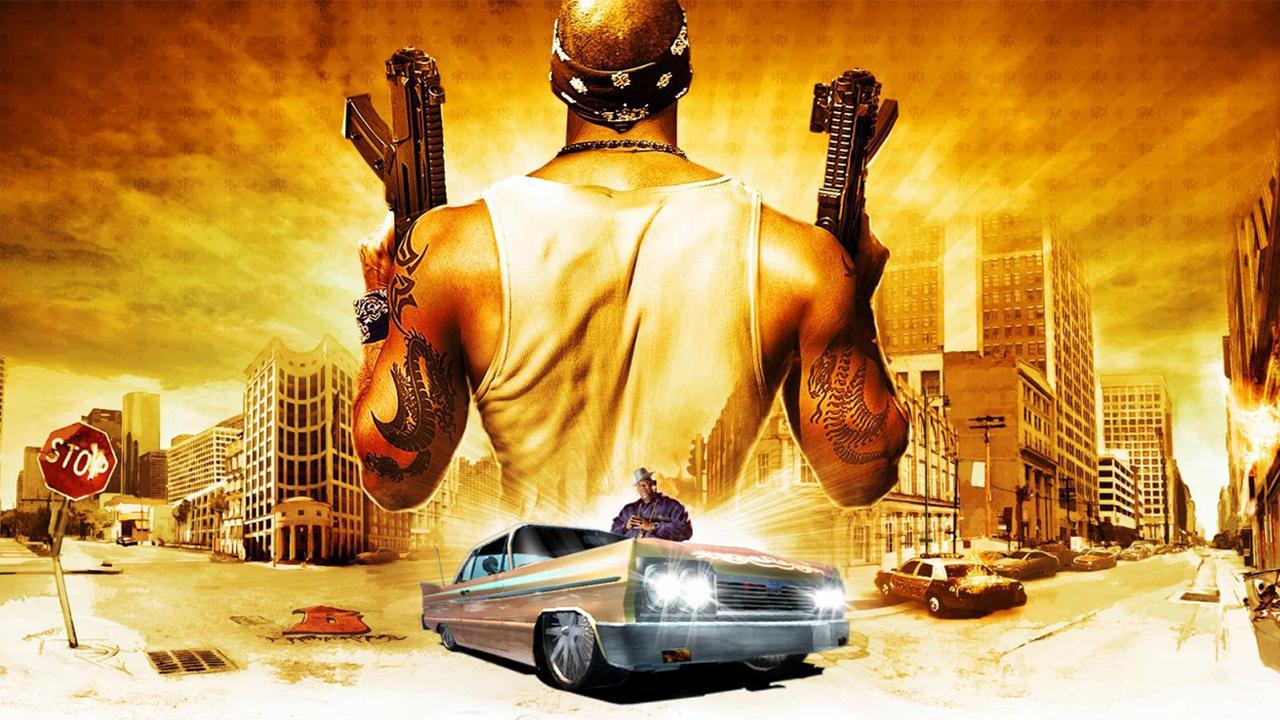
While most Grand Theft Auto competitors disappeared after one or two releases, Saints Row initially looked capable of establishing itself as a genuine alternative to Rockstar’s enormously successful franchise. Developed by Volition and released for the Xbox 360 in 2006, the original game arrived at an interesting moment. Grand Theft Auto: San Andreas had already pushed the boundaries of what an open-world crime game could achieve, but GTA IV was still two years away. Saints Row stepped into that gap, offering players a new criminal playground with improved visuals, extensive customisation and a storyline centred around the violent struggle for control of the fictional city of Stilwater.
The similarities to GTA were obvious. Players could steal vehicles, explore a large city, purchase weapons and complete missions for criminal organisations. But Saints Row had enough interesting ideas to stand on its own. Instead of working through a succession of loosely connected criminal employers, players joined the 3rd Street Saints and became involved in a gang war against the city’s established factions. Territorial control was central to the experience, while the character creation system allowed players a level of personalisation that GTA simply wasn’t offering at the time. There was also an emphasis on street-level criminal activity, with the feeling that you were genuinely working your way up through a dangerous organisation rather than simply following someone else’s orders.
Saints Row 2, released in 2008, took those foundations and expanded them into what many players still consider the series’ finest entry. Stilwater became a more interesting and varied environment, customisation options were improved, and the range of activities was expanded significantly. It also managed to strike an excellent balance between serious criminal storytelling and completely ridiculous sandbox entertainment. One moment you could be involved in a surprisingly brutal gang confrontation, and the next you’d be throwing yourself into traffic for insurance money or spraying buildings with sewage. It was stupid, occasionally outrageous and frequently hilarious, but beneath the nonsense was still a proper gangster game with memorable characters, rival organisations and a compelling struggle for control of the city.
That balance was arguably what made Saints Row 2 so successful. It understood that being different from GTA didn’t necessarily mean becoming as ridiculous as possible. The game could be funny without undermining its own storyline, and its exaggerated activities complemented rather than replaced the underlying criminal drama. For a while, Volition appeared to have found exactly what it needed: a distinctive alternative to Rockstar’s more grounded direction that still retained the fundamental appeal of building a criminal empire.
Saints Row: The Third, released in 2011, marked a significant change in direction. The action moved to Steelport, the Saints had become celebrities, and the series embraced an increasingly exaggerated approach to almost everything. Its characters were more outrageous, its missions became considerably more absurd, and its sense of humour was pushed to the forefront. There was still plenty to enjoy, and The Third was undeniably entertaining, but it also felt like the beginning of a shift away from what had made the first two games so compelling. The gang warfare and criminal empire-building that previously formed the backbone of the franchise were gradually being overshadowed by spectacle and increasingly ridiculous scenarios.
Unfortunately, things went completely off the rails after that. Saints Row IV, released in 2013, effectively abandoned the idea of being a traditional open-world gangster game altogether. The player’s character became President of the United States, aliens invaded Earth, and the action moved into a simulated version of Steelport where players could run at superhuman speeds, leap over skyscrapers and unleash extraordinary superpowers. By this point, stealing cars and engaging in street-level gang warfare had become almost irrelevant. Why bother driving across the city when you could simply sprint faster than traffic and jump over buildings? What had started as a credible rival to GTA had transformed into something closer to a superhero comedy.
To be fair, Saints Row IV had its fans and was generally well received. Its outrageous abilities and ridiculous scenarios offered a different kind of entertainment, and there was certainly fun to be had with its deliberately absurd approach. But for players who had fallen in love with the original games, it was difficult not to feel that the franchise had completely lost its identity. The series had always contained humour and bizarre activities, but those elements once existed alongside a recognisable gangster story. Now the ridiculousness had become the entire point, and each new instalment seemed determined to outdo the last regardless of whether it made sense for the franchise.
The 2015 standalone expansion Gat out of Hell pushed things even further, sending the characters into a supernatural adventure through Hell. It was another example of a series that appeared to have forgotten what originally made it successful. There is nothing inherently wrong with an outrageous, over-the-top action game, but it was difficult to understand why Saints Row needed to abandon so much of its original appeal to become one. The franchise already had a solid identity as a customisable, gang-focused sandbox with a dark sense of humour. Turning its characters into superheroes fighting aliens and demons might have generated short-term excitement, but it also left the series with very little room to develop.
Volition attempted to revive the franchise with a reboot in 2022, introducing a new cast, a new setting and a return to a more recognisable criminal framework. Unfortunately, the result failed to recapture the magic of the earlier games. Its characters, writing and overall direction proved divisive, while technical problems and dated gameplay undermined what should have been a fresh start. Volition was closed in 2023, leaving the future of Saints Row uncertain and bringing an unfortunate end to one of the few franchises that had genuinely managed to compete in GTA’s territory.
The frustrating thing about Saints Row is that it didn’t necessarily need to become bigger, louder or increasingly absurd to succeed. The first two games had already established a compelling formula, and Saints Row 2 in particular demonstrated how to combine serious gang warfare with ridiculous open-world fun. Had Volition continued developing that approach, it’s fascinating to imagine what the series might have become. Instead, it increasingly chased its own reputation for outrageousness until the original gangster experience was almost unrecognisable. Saints Row remains one of the most successful GTA alternatives ever created, but it’s also a reminder that finding your own identity means very little if you eventually abandon it.
Final Thoughts — When GTA Had Some Genuine Competition
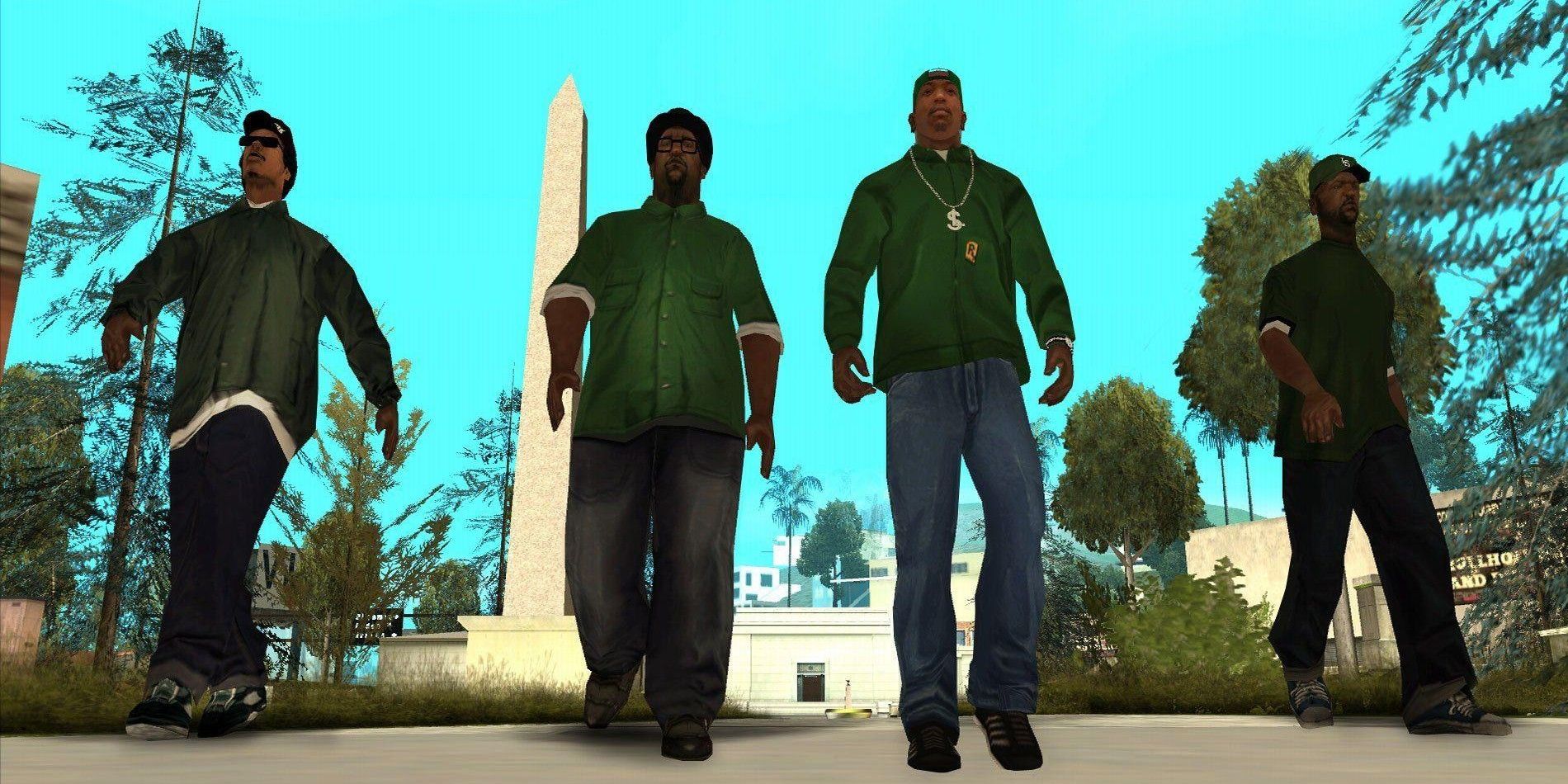
Looking back at the open-world games of the 2000s, it’s easy to forget just how much competition Grand Theft Auto actually faced. Rockstar might have dominated the genre commercially, but it was far from the only developer experimenting with enormous cities, criminal storylines and the freedom to approach objectives in different ways. For a period, it seemed as though almost every major publisher wanted its own open-world crime franchise, and while the results varied considerably, that competition produced some genuinely memorable experiences.
What makes these games interesting today is how differently they approached the same basic concept. Driver had established its own identity through cinematic driving long before GTA III arrived, while True Crime offered players the opportunity to explore the criminal underworld from the perspective of a police officer. The Getaway attempted something more grounded, combining a remarkably detailed recreation of London with a serious British gangster story. Scarface: The World Is Yours embraced the extravagant lifestyle of Tony Montana, giving players the satisfaction of rebuilding a criminal empire in Miami.
The Godfather games arguably deserve particular recognition for just how much they attempted to do differently. Their emphasis on extortion, criminal enterprises, family management and territorial control made them feel like genuine gangster simulators rather than straightforward GTA alternatives. The sequel’s ability to recruit specialists and carry out repeatable bank robberies years before GTA V is the sort of feature that deserves to be remembered. They might not have possessed Rockstar’s polish or production budgets, but they offered a different kind of freedom that remains surprisingly compelling.
Saints Row presents a more complicated legacy. It was arguably the strongest evidence that another franchise could compete with GTA and establish a substantial following of its own. Yet its gradual transformation from a gang-focused crime series into an increasingly absurd superhero adventure also demonstrates how easily a franchise can lose sight of its original appeal. Saints Row 2 remains a reminder of what Volition achieved when it found the right balance, and it’s disappointing that the series never fully returned to those strengths.
Of course, nostalgia shouldn’t blind us to the problems these games had. Many suffered from awkward combat, unreliable artificial intelligence, frustrating missions and technical limitations that would be difficult to tolerate today. Some were clearly rushed, while others attempted to achieve far more than the available hardware could comfortably support. But there was something exciting about an era in which so many developers were willing to experiment with the open-world formula rather than simply leaving Rockstar to dominate it unchallenged.
Perhaps that’s what makes this period worth revisiting. Modern open-world games might be larger, more detailed and technically sophisticated, but the genre has lost several franchises that once offered genuinely different experiences. There was room for a serious London gangster drama, a cinematic undercover police adventure, a criminal empire management game and a ridiculous but surprisingly effective gang warfare simulator. Each brought something different to the table, and their existence made the genre considerably more interesting.
Grand Theft Auto might have emerged as the undisputed winner, but winning doesn’t necessarily mean that everything else deserved to disappear. Some of these games were flawed, others were genuinely excellent, and a few contained ideas that modern open-world developers could still learn from. For those of us who remember exploring Stilwater, intimidating New York shopkeepers or navigating London’s streets on the PlayStation 2, they represent more than a collection of forgotten GTA clones. They represent a period when the genre was still finding its feet, and when some of its most interesting ideas came from developers brave enough to try something different.