

Why Def Jam Fight For NY refuses to fade
There are cult classics, and then there’s Def Jam: Fight for NY . A bruiser that fused mixtape swagger with arcade mayhem and somehow made it feel obvious in hindsight. In 2004 it landed like a flying elbow in Timberlands: a celebrity-stuffed roster, a story that played like a DVD-era street drama, and combat that was equal parts AKI wrestling heft and wild street-fighting improvisation. Two console generations later, it’s the licensed fighter people still ask to come back. Fight for NY wrapped expressive systems in a culture-first package, letting you throw a rival into a subway pole, flash Jacob the Jeweler’s ice, and then finish with a Blazin’ move while the crowd lost its mind. That blend of mechanics and music-industry myth made it a moment . It also helps that the minute-to-minute play still plays well in 2026.
The History
Fight for NY didn’t appear from nowhere; it was the sequel to 2003’s Def Jam: Vendetta, a sleeper hit built with Japan’s AKI Corporation (the studio behind the beloved N64 wrestling games) alongside EA Canada under the EA BIG imprint. The follow-up kept the partnership intact and then widened the canvas: multi-platform on PS2, Xbox, and GameCube, with the PSP spin-off arriving later. The dev DNA mattered. AKI’s timing, weighty grapples, and readable animations gave the hits that “crunch,” while EA’s production machine delivered the polish, voice work, and music licensing that made the whole thing feel bigger than a fighting game. It’s that rare sequel that both respects what worked and ruthlessly iterates on what didn’t — trading Vendetta’s ring-centric wrestling for a street-fighting sandbox where the environment is a weapon and the crowd is complicit.

Building a Brawler with Mixtape DNA: Systems you can feel
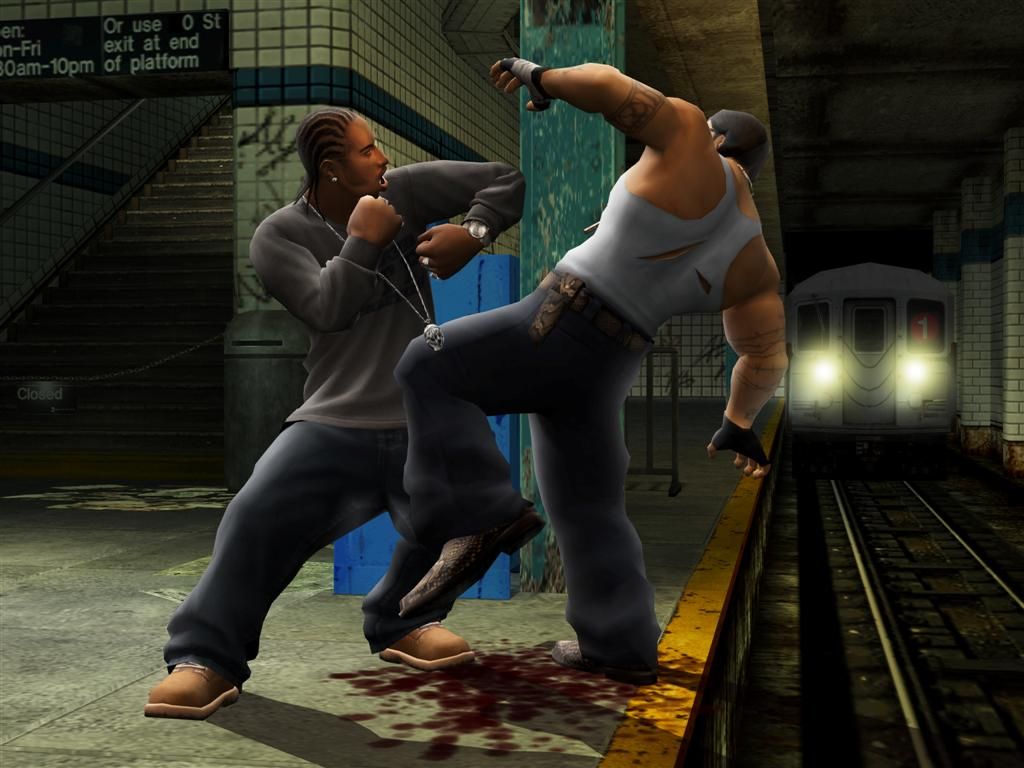
On paper, the combat pitch reads simple. Five base styles: Street fighting, Kickboxing, Martial Arts, Wrestling, and Submissions. You Can blend styles into hybrid builds, so your custom fighter becomes an expression of how you like to dominate and every venue becomes a ruleset: slam skulls off brick, bounce enemies into steel, swing pipes and bottles, or let the crowd hold someone for you like it’s a backyard card. The “Blazin’” super system gives each fighter their own signature exclamation point — big, readable, and delightfully over-the-top. Crucially, the game wraps all of this in progression that rewards swagger: hit Henry Rollins’ gym to pump stats, spend fight money on fits and chains, and assemble a look that tells your story before the first punch. In other words, you’re not just min-maxing damage; you’re curating a persona. That’s why it still feels modern — it’s a fighter with RPG drip long before that was fashionable.
Story worth the beef: D-Mob vs. Crow and your rise through the underground
The Campaign in Def Jam Fight for NY plays like a pulpy rap DVD, casting you as the unnamed upstart who drags kingpin D-Mob out of a police car and straight into a turf war against Crow, a velvet-voiced menace played by Snoop Dogg. You grind through grimy clubs and loading docks, building rep, fracturing alliances, and — in a decidedly mid-2000s twist — choosing a girlfriend among real-world stars that fit the era’s music-video logic. It’s messy, loud, and sincere about its world, and the whole thing crescendos into personal betrayals, kidnappings, and a final showdown that makes the title’s “Fight for NY” promise feel literal. Yes, it’s melodrama, but it’s energetic melodrama — the kind that punctuates character beats with broken furniture.
The roster: Star power that felt impossible
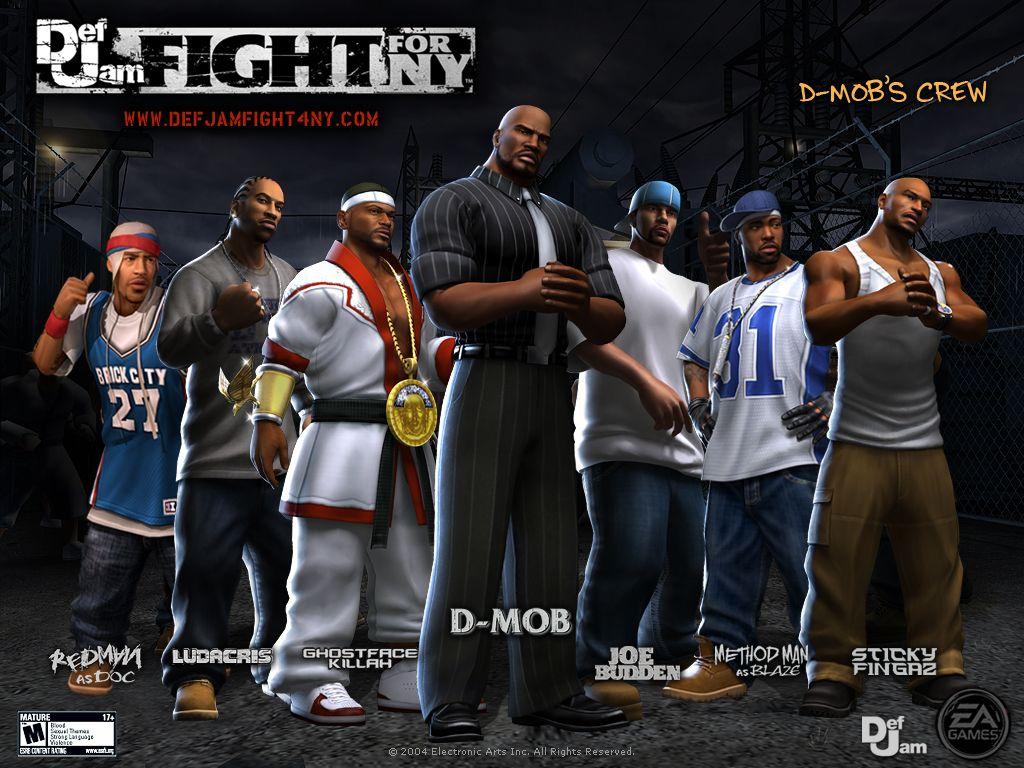
The headliners are what people remember first: Snoop Dogg, Method Man, Redman, Busta Rhymes, Fat Joe, Ludacris, Xzibit, Ice-T, Ghostface Killah, Lil’ Kim, Slick Rick, and Sean Paul among many others, plus cultural cameos like Henry Rollins and Jacob the Jeweler. It’s a surreal time capsule and a marketing miracle, the kind of licensing medley that nowadays would crash three law firms and a Slack server. Official counts vary by platform and version, but broadly you’re looking at around 70 fighters including originals — a fat roster even by modern standards. More important than the number: each star reads clearly on the stick, with mannerisms and Blazin’ moves tailored to persona. That clarity is why the roster still lands on social feeds with “I can’t believe this existed” delight.
Critical reception to Def Jam Fight For NY
Contemporary reviews were broadly glowing, highlighting the deeper mechanics, interactive stages, and unapologetic style. The PS2 version sits in the low-80s on Metacritic (with Xbox similar), a healthy consensus for a loud, licensed fighter competing against legacy heavyweights. It also punched its way into year-end award conversations, nabbing a Fighting Game of the Year nomination from the Academy of Interactive Arts & Sciences while Mortal Kombat: Deception took the crown. The gist from critics then and fans now is the same: a fun-forward, brutal brawler that plays better than a cross-promote has any right to.
Beyond headlines and memes, Fight for NY actually moved copies — comfortably clearing the “over a million sold” bar — and it did so with legs. Part of that longevity is cultural: Fight for NY wasn’t a cash-in; it felt authored. Part is mechanical: few fighters let you weaponize a venue with this much cruelty and comic timing. The result was a rare licensed game that won on both fronts, turning a label partnership into a legit genre entry.
After the PSP remix, EA brought the brand to HD with Def Jam: Icon (2007) under a different studio banner and a new philosophy: music-driven environmental hazards and a pared-back move set. It looked slick and its audio-reactive arenas were clever, but it lacked AKI’s tactile depth and the outrageous crowd-weapon chaos fans craved. The pivot makes perfect sense on paper — new hardware, new tech, new identity — yet history has been clear about what people wanted from Def Jam: the delicious illegality of Fight for NY’s ringless brawling. Respect to the experiment, but the crown stayed with 2004.

The remaster mirage: Why it hasn’t returned (and why people keep hoping for a Def Jam Fight for NY re-release
“Why can’t they just re-release it?” Because licensing. The game’s unique magic — real artists, real brands, period-correct tracks, and cameos — is also the legal Gordian knot that keeps it trapped on aging discs. Developers and creatives have openly acknowledged that a modern reissue would mean renegotiating a thicket of likeness, music, and brand deals across multiple companies… for every region. That’s heavy paperwork, not impossible but far from trivial. The hard truth: Fight for NY is precisely the sort of game least likely to get an easy remaster, which perversely makes nostalgia burn hotter and second-hand prices rise.
Design lessons modern fighters can steal
Fight for NY endures because it pairs expressive systems with expressive culture. Mechanically, hybrid styles and venue interactions give you a sandbox of solutions rather than a single “right” combo route. Aesthetically, the game understands identity as a core loop: build a fighter, build a look, build a legend. Narratively, it’s unpretentious and propulsive — win scraps, climb ladders, make choices, suffer consequences — which keeps momentum high without needing tournament-bracket contrivances. And socially, it’s loud couch co-op gold: immediate, legible, and never shy about rewarding disrespect with a steel pipe. If you’re making a modern licensed game, start here: treat the license as culture, not wallpaper; make environments complicit; let players express style through mechanics and cosmetics; and make the big moves big. Then layer in robust training and rollback online so it survives beyond the sofa. Fight for NY wrote that playbook before Twitter threads and Discord tech labs; it’s wild how current it still reads.

The definitive verdict: The moment the genre got its swagger back
There’s a reason clips of Crack powerbombing players through railings or Crow’s boss fight still go viral: the game knows how to stage violence with personality. It was lightning in a bottle — the right tech, the right collaborators, the right cultural moment — and it landed with enough force to keep echoing long after the label dust settled. If brawlers are about feedback, then Fight for NY is feedback incarnate: every punch sounds like concrete, every Blazin’ like a music video finale, every victory pose a flex that says “tell your crew.” Licensed games rarely get immortal status; this one earned it. In a kinder timeline, we’d all be debating frame data on a 4K remaster. In this one, we nod, fire up the old hardware, and remember how sweet it was to throw hands in a club called The Limit while the crowd egged us on. Nothing hit the same like Def Jam Fight for NY.